Advanced
Advanced Reader Books
For young readers who have blown past grade level — richer vocabulary, deeper plots, and themes that still stay age-appropriate.
15 parent-vetted picks
As an Amazon Associate I earn from qualifying purchases. Learn more


Top picks parents buy
Hand-picked books that fit this guide. Prices and availability are shown on Amazon.
6 min read · Updated October 9, 2026
The short answer
Advanced reader books are titles featuring elevated vocabulary, complex sentence structures, and sophisticated themes that challenge high-ability readers without introducing adult content prematurely. These books bridge the gap between grade-level expectations and intellectual readiness, offering gifted children dense narratives, historical depth, and nuanced character development tailored to their maturity.
Key takeaways
- Advanced readers need books that match their intellectual curiosity without exposing them to inappropriate social themes.
- Non-fiction adaptations and memoirs provide high-level vocabulary through real-world narratives.
- Classics remain a staple for advanced readers due to their complex sentence structures and archaic language.
- High-concept sci-fi and fantasy offer the world-building depth that keeps gifted minds engaged.
- Pre-reading is essential for titles like Ender's Game or Hitler Youth which contain heavier thematic elements.
Understanding the Advanced Reader Gap
An advanced reader is often a child whose decoding skills and vocabulary far outpace their emotional maturity. When a third-grader is reading at an eighth-grade level, parents often struggle to find books that provide a linguistic challenge without introducing teen-centric themes like romance or extreme violence. These children need stories that respect their intelligence, offering dense prose and intricate plotting while keeping the emotional stakes manageable. For these readers, the goal is not just to finish a long book, but to engage with language that requires active thought and analysis.
The difficulty in selecting advanced reader books lies in the shift between Middle Grade and Young Adult (YA) literature. Middle Grade books, usually for ages 8 to 12, are safe in content but can sometimes feel too simple for a gifted child. YA books, meant for ages 13 and up, offer the complexity these readers crave but often include mature social situations. Finding the sweet spot means looking for 'clean' YA or sophisticated Middle Grade titles that push the boundaries of language and structure without crossing the line into adult themes prematurely.
Challenging Classics for Early Bloomers
Classic literature is the traditional refuge for the advanced reader. Books like Little Women by Louisa May Alcott are perfect for ages 10 to 14 because they utilize a 19th-century vocabulary that is significantly more challenging than contemporary fiction. The sentence structures are longer, the descriptions are more lush, and the moral dilemmas are deeply nuanced. While the pacing is slower than modern thrillers, the intellectual payoff for a child who can navigate the prose is immense. Alcott’s work provides a safe yet rigorous environment for developing deep reading stamina.
Another excellent choice for those who enjoy high-fantasy worlds with a classic feel is The Book of Three by Lloyd Alexander. Part of The Chronicles of Prydain, this series is suitable for ages 8 to 18 and serves as an entry point into epic storytelling. The language is elevated and the themes of heroism and sacrifice are handled with a weight that respects the young reader. It offers a complexity in world-building that mirrors larger works like Lord of the Rings but remains accessible to a younger audience. These classics build a foundation for later academic success by familiarizing students with older English dialects and formal syntax.
Sophisticated Mysteries and Whodunits
Mysteries are uniquely suited to advanced readers because they require the child to track multiple plot threads and make logical deductions. The Three Investigators in the Secret of Terror Castle is a fantastic example for ages 9 to 12. Unlike more modern, simplified mysteries, this series features a vocabulary that is surprisingly robust and a protagonist who relies on his intellect and library research rather than gadgetry. It encourages critical thinking and rewards readers who pay attention to subtle textual clues, making it a 'safe' yet stimulating choice for younger kids.
For a more modern and stylistic challenge, Lemony Snicket’s Who Could That Be at This Hour? is an essential pick for ages 9 to 12. The All the Wrong Questions series uses noir-style tropes and a very specific, ironic voice that requires a high level of reading comprehension to fully appreciate. Snicket frequently defines difficult words within the text, but he does so in a way that is playful rather than patronizing. This meta-fictional approach helps advanced readers understand literary devices like unreliable narrators and irony, which are key components of higher-level literature.
Non-Fiction and Memoirs for Curious Minds激
Gifted readers often gravitate toward non-fiction because it provides a density of information that fiction sometimes lacks. Lincoln: A Photobiography by Russell Freedman is a standout for ages 9 to 12. It uses primary source documents, photographs, and sophisticated narrative non-fiction techniques to tell the story of the 16th president. The reading level is high, requiring the child to process historical context and political nuances, yet the format remains engaging and visually supported. This type of reading builds background knowledge that is crucial for future history and social studies courses.
Memoirs offer another avenue for advanced linguistic exploration. A Girl from Yamhill by Beverly Cleary is a memoir intended for ages 12 to 16, but it is safe for younger advanced readers who are fans of her fiction. It provides a look at the Great Depression and a writer's life with a level of vocabulary and emotional depth that exceeds her Ramona Quimby books. Similarly, The Boys in the Boat (Young Readers Adaptation) brings the complex history of the 1936 Olympics to a younger audience (ages 10-14) without sacrificing the sophisticated prose and technical details of rowing that made the original a bestseller.
High-Concept Sci-Fi and Fantasy Challenges
Science fiction often presents the most significant challenges in terms of conceptual thinking. Ender's Game by Orson Scott Card is a classic recommendation for ages 14 to 18, though many gifted 11- and 12-year-olds tackle it. Parents should exercise caution, as the book deals with intense psychological themes and military violence. However, the tactical brilliance of the protagonist and the ethical questions regarding war provide exactly the kind of intellectual meat advanced readers crave. It is a book that demands discussion and critical analysis of leadership and morality.
For readers who want complex world-building with a lighter tone, The Bartimaeus Sequence: The Amulet of Samarkand by Jonathan Stroud is a masterpiece. Targeted at ages 12 to 16, it features a dual-perspective narrative, one of which is told entirely through sarcastic footnotes by a cynical djinni. Managing the footnotes while following the main plot is a great exercise in cognitive flexibility. The political intrigue and the complex system of magic provide a challenge that far exceeds standard middle-grade fantasy, making it a rewarding experience for students who feel they have 'outgrown' simpler magic series.
Ready to buy?
Grab these picks on Amazon — we may earn a small commission at no extra cost to you.
Get our monthly book picks
One email a month with the best clean books for your kids' ages. No spam — unsubscribe anytime.
Frequently asked
How do I know if a book is advanced enough for my child?+
Look for books with dense text, archaic vocabulary, or complex narrative structures like non-linear timelines.
What are the best classics for advanced young readers?+
Classics like Little Women or The Book of Three are excellent because they offer rich language while maintaining age-appropriate themes.
Can a 10-year-old read books intended for high schoolers?+
Absolutely, as long as the content matches their emotional maturity; books like The Boys in the Boat (Young Readers Adaptation) are perfect for this.
Are there advanced non-fiction books for middle schoolers?+
Non-fiction titles like Lincoln: A Photobiography provide high-level facts and sophisticated prose that engage curious minds.
How can I find challenging books that aren't too mature?+
Focus on the Lexile level or word count rather than just the recommended age, and pre-read for sensitive content.
Is fantasy a good genre for advanced readers?+
Yes, advanced fantasy like The Amulet of Samarkand offers complex world-building and dry wit that challenges intellectual capacity.
Books to explore next
Hand-picked reads that fit this topic — tap through for the full parent review.
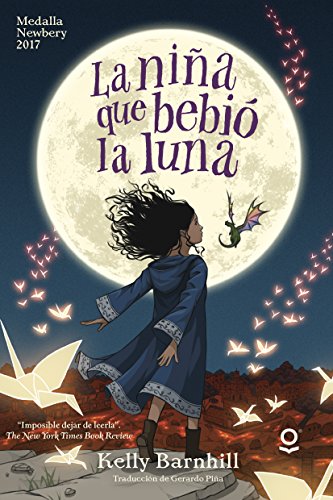
The Girl Who Drank the Moon
by Kelly Barnhill
Read the parent review →

A Wrinkle in Time
by Madeleine L'Engle
Read the parent review →
The Indian in the Cupboard
by Lynne Reid Banks
Read the parent review →

Sarah, Plain and Tall
by Patricia MacLachlan
Read the parent review →

Flora and Ulysses
by Kate DiCamillo
Read the parent review →
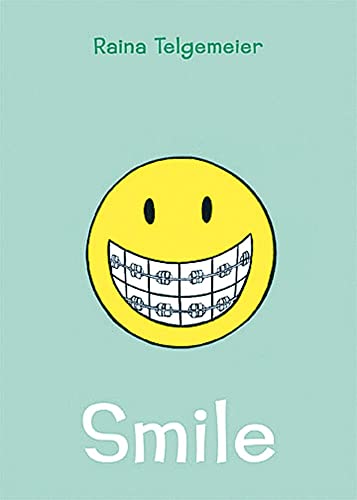
Smile
by Raina Telgemeier
Read the parent review →
Keep exploring
If They Loved · Narnia
15 Best Books Like Narnia for Kids (Parent-Approved 2026)
6th Grade · Age 11
30 Best Books for 6th Graders (Parent-Approved Middle Grade 2026)
Grades 6–8
Middle School Reading List
Read-alikes
Books Like Percy Jackson
Read-alikes
Books Like Harry Potter
Age 12 · Seventh Grade
30 Best Books for 12-Year-Olds — Middle Grade Parents Trust (2026)
Get new picks like these in your inbox
One short email a week — new reading lists, parent-vetted picks, and free guides.